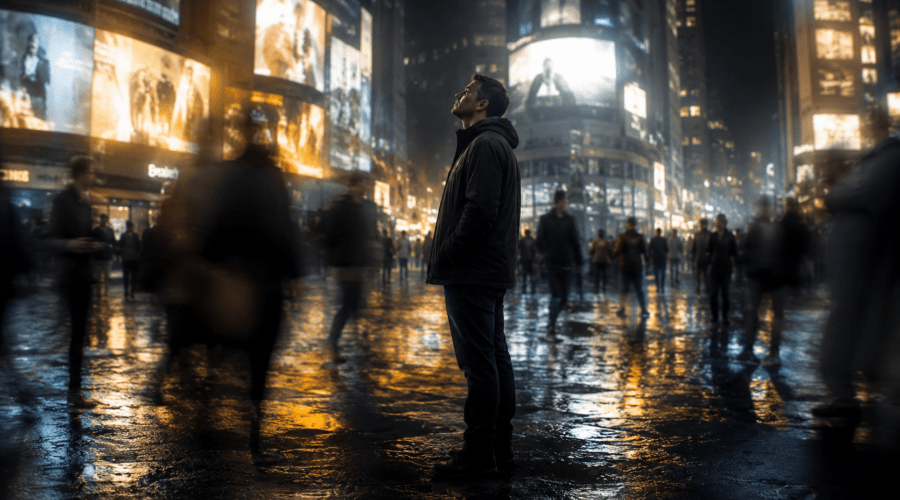
Across the world, many people feel that something deeper is changing in modern society.
Despite technological progress, wealth, entertainment, and constant digital connection, millions of people still report feeling emotionally empty, anxious, disconnected, and spiritually lost.
Mental health struggles, loneliness, social division, addiction, and declining trust in institutions are becoming increasingly common.
For many observers, this raises a difficult question:
Are we living through a spiritual crisis?
What Is a Spiritual Crisis?
A spiritual crisis does not necessarily mean organized religion is disappearing.
Rather, it refers to a growing sense of:
- Meaninglessness
- Emotional emptiness
- Loss of purpose
- Disconnection from values
- Loss of inner peace
- Weakening human empathy
People may appear successful externally while still feeling deeply unfulfilled internally.
Modern Life Is Faster but Emotionally Heavier
Modern society moves at an extremely fast pace.
People are constantly surrounded by:
- Notifications
- News updates
- Social media pressure
- Financial stress
- Work demands
- Political conflict
The human mind rarely gets time to rest.
Many people feel mentally exhausted even while remaining constantly stimulated.
This nonstop pressure can weaken emotional balance and spiritual well-being.
Material Success Does Not Always Bring Fulfillment
Modern culture often measures success through:
- Money
- Status
- Fame
- Productivity
- Online popularity
While these things may improve comfort, they do not automatically create inner peace.
Many people discover that financial achievement alone cannot fully satisfy emotional or spiritual needs.
Human beings also need:
- Meaning
- Connection
- Purpose
- Belonging
- Inner stability
Without these things, success can still feel empty.
Loneliness Is Rising Worldwide
One major sign many experts point to is the growing loneliness epidemic.
Despite living in a digitally connected world, millions of people report feeling isolated.
Some contributing factors include:
- Reduced family interaction
- Social media addiction
- Remote lifestyles
- Declining community involvement
- Emotional disconnection
Loneliness affects not only mental health, but also emotional and spiritual well-being.
Social Media and Emotional Disconnection
Social media has changed how people communicate and compare themselves to others.
Many platforms encourage:
- Constant comparison
- Validation seeking
- Outrage culture
- Emotional reactivity
- Short attention spans
Instead of creating peace, digital environments can sometimes increase anxiety, insecurity, and emotional instability.
Some psychologists believe excessive digital stimulation may reduce self-reflection and emotional depth.
Declining Trust and Social Division
Many societies are experiencing growing distrust toward:
- Governments
- Media organizations
- Political leaders
- Corporations
- Public institutions
At the same time, political and social polarization continue increasing.
This creates an environment where people feel emotionally divided, uncertain, and disconnected from one another.
For some individuals, the loss of shared values contributes to a broader sense of spiritual instability.

Mental Health Struggles Are Increasing
Anxiety, depression, burnout, and emotional exhaustion are becoming more common globally.
Mental health experts point to multiple contributing factors:
- Economic stress
- Social isolation
- Digital overload
- Fear-driven media
- Lack of balance
- Constant pressure to perform
Many people feel trapped between external expectations and internal emptiness.
Why Many People Are Searching for Meaning Again
Interestingly, even as traditional religious participation changes in some regions, interest in spirituality, mindfulness, self-reflection, and emotional healing continues growing.
People are increasingly searching for:
- Purpose
- Peace
- Inner stability
- Authentic connection
- Meaningful communities
This search suggests that many people recognize something important may be missing from modern life.
Spiritual Crisis Does Not Affect Only Religious People
A spiritual crisis can affect anyone regardless of religion or belief system.
Even non-religious individuals may experience:
- Emotional emptiness
- Loss of direction
- Identity confusion
- Existential anxiety
- Deep loneliness
The issue is often less about formal religion and more about the human need for meaning and emotional grounding.
Can Society Recover?
Many experts believe recovery is possible, but it may require major cultural shifts.
Some healthy steps include:
1. Slowing Down
Reducing constant digital stimulation can improve emotional clarity.
2. Rebuilding Human Connection
Strong relationships and communities help restore emotional balance.
3. Prioritizing Mental Health
Open discussions around emotional well-being are increasingly important.
4. Practicing Reflection and Gratitude
Moments of silence, reflection, prayer, meditation, or mindfulness may help many people reconnect internally.
5. Focusing on Purpose
Meaningful goals and service to others often improve emotional fulfillment.
Final Thoughts
Modern society has achieved extraordinary technological and scientific progress.
But many people still feel emotionally overwhelmed, spiritually disconnected, and uncertain about the future.
Whether one views this as a spiritual crisis, a mental health crisis, or simply a side effect of modern life, it is clear that millions of people are searching for deeper meaning and genuine connection.
The challenge facing society may not only be economic or political.
It may also be deeply human.
In a world filled with noise, distraction, and constant pressure, many people are simply trying to rediscover peace, purpose, and emotional balance.
Leave a Comment