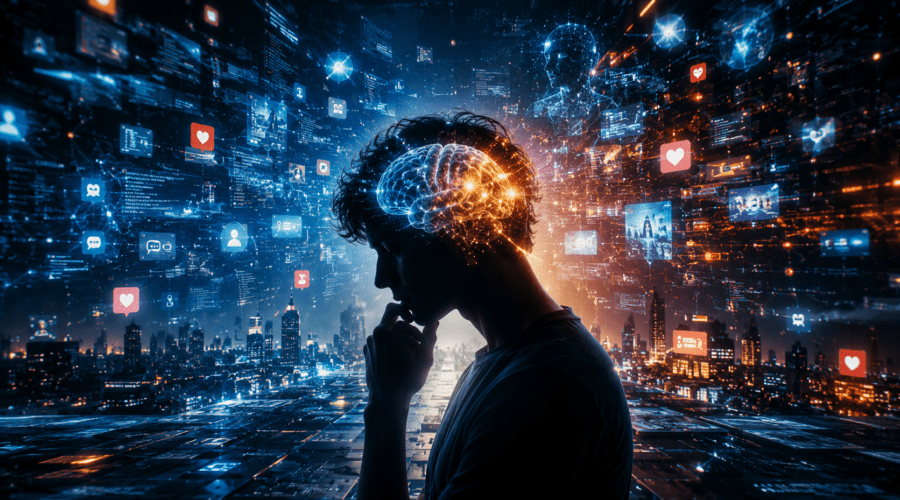
Artificial intelligence has become one of the most talked-about technologies in the world. From AI chatbots and image generators to recommendation algorithms and smart assistants, AI now influences how people work, study, communicate, shop, and even think.
But as AI tools become more powerful, a growing question is emerging:
Is AI helping human intelligence — or slowly replacing it?
The answer is more complicated than many people realize.
AI is not simply a futuristic concept anymore. It is already integrated into daily life in ways most people barely notice. Search engines suggest answers before we finish typing. Social media algorithms decide what content we see. Navigation apps choose the fastest route. AI tools write emails, summarize articles, generate images, and even assist with coding.
These technologies make life more convenient. But convenience can sometimes come with hidden costs.
The Rise of Mental Shortcuts
Human beings naturally look for easier ways to solve problems. Throughout history, tools have helped reduce physical labor. AI is different because it reduces mental effort.
Instead of researching deeply, many people now ask AI for instant answers. Instead of writing from scratch, they generate drafts automatically. Instead of memorizing information, they rely on devices to remember everything for them.
This creates a major shift in how humans engage with thinking itself.
The concern is not that AI exists. The concern is what happens when people stop exercising important cognitive skills because technology is always doing the work for them.
Critical thinking, problem-solving, creativity, and independent analysis develop through practice. Like muscles, these abilities can weaken when rarely used.
Convenience vs Understanding
One of AI’s greatest strengths is speed.
An AI system can summarize a 20-page document in seconds, generate ideas instantly, or provide explanations on almost any topic. This saves enormous amounts of time.
But speed does not always equal understanding.
When people rely too heavily on automated answers, they may begin accepting information without fully questioning or analyzing it themselves. Over time, this can create shallow knowledge rather than deep comprehension.
For example:
- reading a summary is not the same as studying a subject deeply
- generating content is not the same as mastering writing
- asking AI for opinions is not the same as forming personal judgment
AI can assist thinking, but it should not replace the thinking process itself.
Social Media Already Changed Human Attention
Many experts argue that the decline in human attention spans began before AI became mainstream.
Social media platforms trained users to consume short, fast, emotionally stimulating content. Endless scrolling, notifications, and algorithm-driven feeds reduced patience for long-form reading and deep concentration.
AI is now accelerating this trend.
People increasingly expect:
- instant answers
- simplified explanations
- faster content
- less effort
- shorter attention requirements
While this improves efficiency, it may also reduce reflection, curiosity, and intellectual patience.
AI Is a Tool — Not a Human Mind
Despite rapid progress, AI still does not think like humans.
AI does not possess:
- consciousness
- emotions
- moral awareness
- personal experiences
- genuine intuition
- human wisdom
AI predicts patterns based on massive amounts of data. It can imitate conversation remarkably well, but it does not truly “understand” life the way humans do.
Human thinking involves emotion, ethics, culture, imagination, relationships, spirituality, and lived experience — things that cannot be fully reduced to algorithms.
This distinction is extremely important.
The Risk of Intellectual Dependence
One growing concern is intellectual dependence.
If future generations rely on AI for every task — writing, research, decision-making, navigation, communication, creativity — people may gradually lose confidence in their own abilities.
This could create a society where:
- fewer people verify information independently
- creativity becomes increasingly automated
- original thinking declines
- humans become passive consumers instead of active thinkers
The danger is not AI becoming smarter than humans overnight. The danger is humans becoming mentally lazy because technology constantly thinks for them.
AI Can Also Expand Human Potential
At the same time, AI is not entirely negative.
Used properly, AI can enhance human productivity and creativity in powerful ways.
Doctors use AI to assist medical analysis. Scientists use AI to process huge amounts of research data. Developers use AI to accelerate coding workflows. Students use AI for tutoring and explanations.
In many fields, AI acts more like an assistant than a replacement.
The key difference is whether humans remain actively engaged in the thinking process instead of blindly depending on automation.
Education Will Need to Adapt
Schools and universities may face major challenges in the AI era.
Traditional education often rewards memorization and repetitive assignments — tasks AI now performs easily.
Future education may need to focus more heavily on:
- critical thinking
- reasoning
- creativity
- ethics
- communication
- problem-solving
- emotional intelligence
These are areas where human abilities still matter deeply.
Teaching people how to think may become far more important than simply teaching people what to memorize.
The Bigger Question
The debate around AI is ultimately not just about technology.
It is about human behavior.
Technology reflects how people choose to use it. AI can become:
- a productivity tool
- a creativity assistant
- an educational resource
- or a replacement for personal effort and thought
The outcome depends largely on human choices.
If people continue reading deeply, questioning information, developing skills, and thinking independently, AI can become a powerful enhancement to human life.
But if convenience becomes more important than understanding, society may slowly lose important intellectual habits that took centuries to develop.
Final Thoughts
AI is not literally replacing the human mind. But it is changing how humans use their minds.
For many people, AI now handles tasks that once required patience, concentration, research, and creativity. This creates both opportunities and risks.
The challenge for modern society is not stopping AI. That is unlikely to happen.
The real challenge is making sure humans continue to think critically, creatively, and independently in a world where machines can increasingly think for us.
#ArtificialIntelligence #AI #HumanThinking #Technology #FutureOfAI #DigitalCulture #CriticalThinking #AIImpact #HumanIntelligence #TechSociety
Leave a Comment