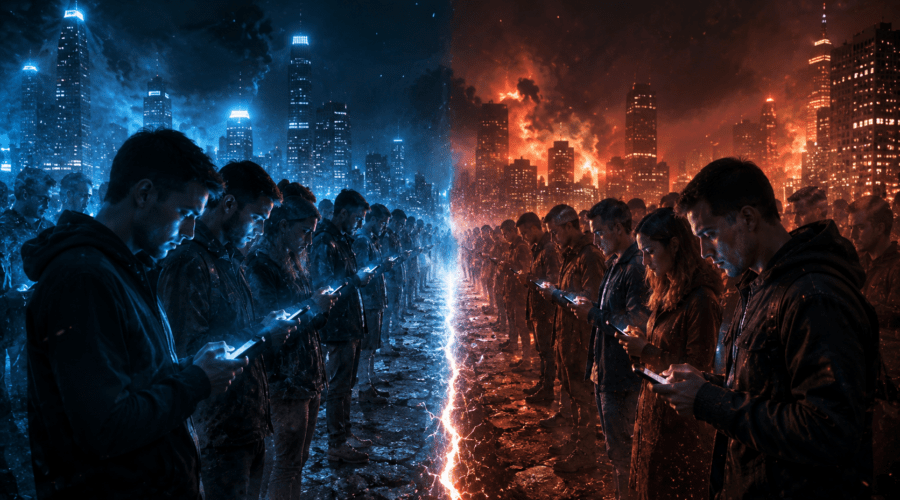
Across the world, many people feel society has become increasingly divided.
Political arguments dominate conversations, social media fuels outrage, trust in institutions is declining, and even friendships or families sometimes struggle to survive differences in opinions and beliefs.
While disagreements have always existed throughout human history, many experts believe modern society is experiencing an unusually intense period of polarization.
The question is: why do people feel more divided than ever before?
Social Media Amplifies Conflict
One of the biggest reasons people feel divided today is the influence of social media.
Online platforms reward content that generates emotional reactions such as:
- Anger
- Fear
- Outrage
- Tribal loyalty
- Shock
The more emotionally charged a post becomes, the more engagement it often receives.
As a result, social media algorithms frequently push controversial content to larger audiences.
This creates an environment where conflict spreads faster than calm discussion.
People Live Inside Information Bubbles
Modern technology allows people to consume information tailored to their existing beliefs.
Many users primarily follow:
- Like-minded communities
- Preferred news sources
- Political influencers
- Algorithm-driven recommendations
Over time, people may become trapped inside “echo chambers” where opposing viewpoints are rarely heard fairly.
This can strengthen division because people increasingly see those who disagree with them as enemies rather than fellow human beings.
Political Polarization Has Intensified
Politics has become deeply emotional in many countries.
For some people, political identity now shapes:
- Friendships
- Relationships
- Social circles
- Career environments
- Online behavior
Instead of simply debating policies, many political discussions now feel personal.
This emotional intensity makes compromise harder and increases hostility between groups.
Economic Stress Creates Social Frustration
Rising living costs, housing pressure, job insecurity, and financial inequality have increased stress worldwide.
When people feel financially insecure, frustration can grow quickly.
Economic pressure often contributes to:
- Anger toward governments
- Distrust of institutions
- Social resentment
- Blaming other groups
- Fear about the future
Periods of economic uncertainty historically increase social division.
Trust in Institutions Is Declining
Many people today express declining trust in:
- Governments
- Media organizations
- Corporations
- Educational institutions
- Political leaders
This distrust can create confusion and instability.
When people no longer agree on basic facts or trust common institutions, society becomes more fragmented.
Different groups begin creating separate realities based on the information they choose to believe.
Constant News Cycles Increase Anxiety
Modern media operates 24 hours a day.
People are constantly exposed to:
- Political conflict
- Crime reports
- International crises
- Economic fears
- Social controversies
Continuous exposure to negative news can create emotional exhaustion and increase feelings of fear or hostility.
Many people feel mentally overwhelmed by the nonstop intensity of modern information.
Identity Politics and Group Loyalty
In many societies, people increasingly define themselves through group identity.
This may include:
- Political identity
- Religion
- Nationality
- Race
- Ideology
- Social movements
While identity itself is natural, extreme group loyalty can sometimes reduce empathy for others.
When people strongly divide the world into “us versus them,” understanding and compromise become more difficult.
Loneliness and Emotional Isolation Contribute to Division
Ironically, even though people are more digitally connected than ever, loneliness continues to rise.
Social isolation can make people:
- More emotionally reactive
- More vulnerable to online manipulation
- More dependent on tribal communities
- More likely to seek validation from extreme groups
Strong real-world relationships often reduce hostility and improve empathy.
Not Everything Is Negative
Despite the growing division, many people still want peace, understanding, and healthy discussion.
In reality, most ordinary people around the world:
- Want safety
- Care about their families
- Desire stability
- Seek happiness
- Prefer peaceful lives
The loudest voices online often do not represent the majority.
Social media can sometimes make division appear larger than it truly is.
Can Society Become More United Again?
Many experts believe reducing division is possible, but it requires conscious effort.
Some important steps include:
1. Encouraging Real Conversations
Face-to-face communication often creates more understanding than online arguments.
2. Reducing Outrage Consumption
Limiting exposure to constant conflict-driven media can improve emotional well-being.
3. Practicing Empathy
Understanding why others think differently does not always mean agreeing with them.
4. Building Strong Communities
Local relationships and real social interaction strengthen trust.
5. Focusing on Shared Humanity
People may disagree politically while still respecting one another as human beings.
Final Thoughts
Modern society is facing growing emotional, political, and social division.
Technology, media, economic pressure, and identity politics have all contributed to a world where many people feel constantly divided from one another.
But division is not inevitable.
Human beings still share many common hopes:
- Peace
- Stability
- Family
- Security
- Meaningful connection
The challenge moving forward may not simply be solving political disagreements.
It may be learning how to rebuild trust, empathy, and respectful communication in an increasingly digital and emotionally reactive world.
Leave a Comment